

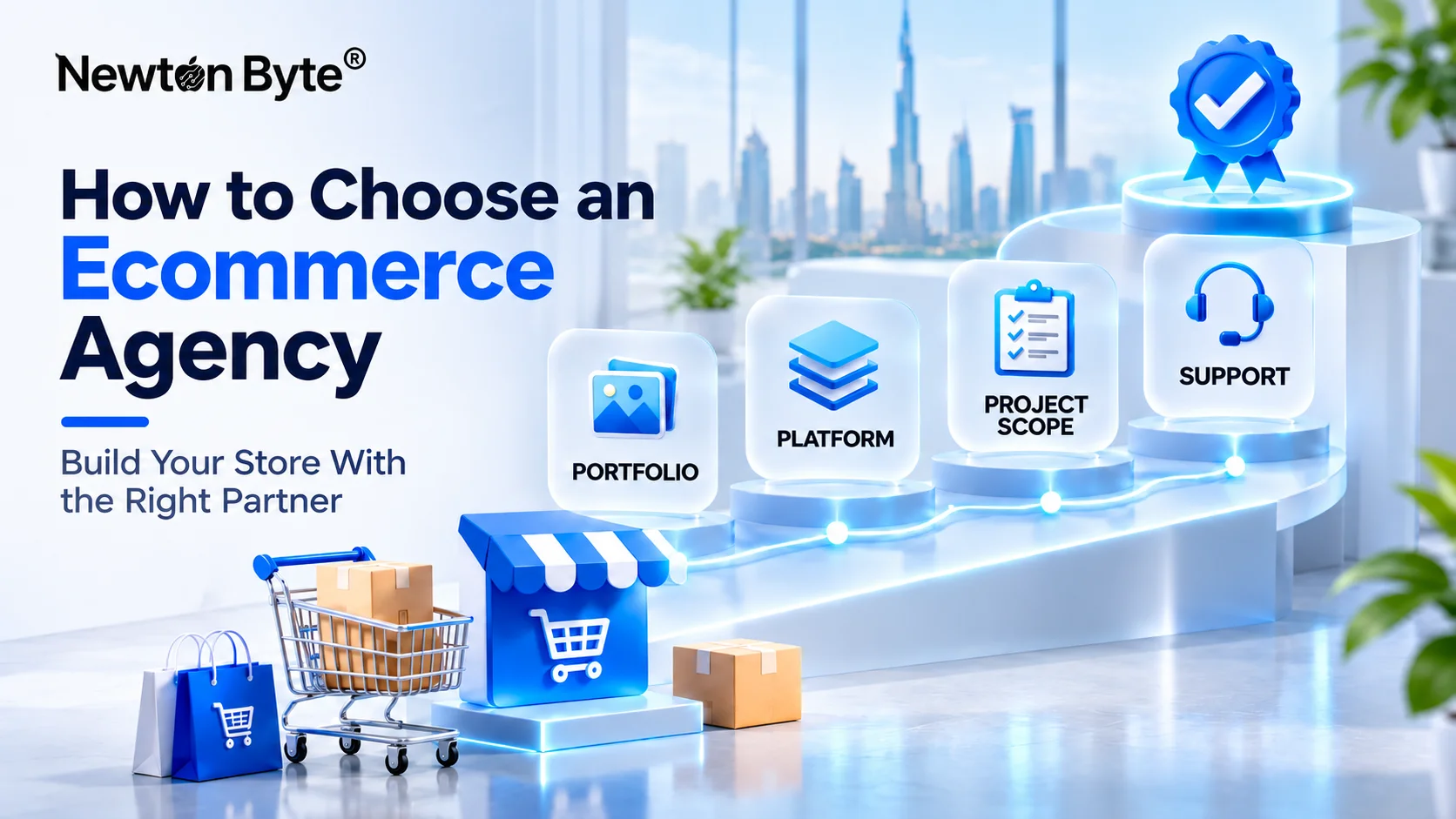
Choosing the right ecommerce agency is an important decision for any business planning to launch an online store or improve an existing one. The agency you work with will influence your website’s design, functionality, shopping experience, performance, and ability to grow.
However, not every ecommerce company offers the same level of expertise. Some focus mainly on website design, while others provide complete ecommerce services, including development, payment integrations, SEO, performance optimization, and ongoing technical support.
Before making a decision, you need to understand what your business requires, evaluate an agency’s experience, review its previous projects, and establish exactly what the partnership will include.
At Newton Byte, we help businesses build and improve online stores through tailored ecommerce development solutions. This guide explains how to evaluate an ecommerce agency, what questions to ask, and which factors to consider before choosing a development partner for your online store.
1. Start by Understanding Your Ecommerce Business Needs
Before contacting an ecommerce agency, identify what you want your online store to achieve. Your requirements will determine which agency has the right experience and technical capabilities.
For example, a new business launching its first online store may need a straightforward Shopify or WooCommerce setup. An established retailer might require custom functionality, inventory synchronization, advanced product filtering, and integrations with existing business systems.
Consider these requirements before approaching agencies:
- Business goals: Are you launching a new store, redesigning an existing website, or migrating to another platform?
- Product catalogue: How many products, categories, variations, and product attributes will your store contain?
- Target customers: Will you sell to individual customers, businesses, or both?
- Payment options: Do you need credit card payments, digital wallets, cash on delivery, or buy-now-pay-later options?
- Shipping requirements: Will you manage local deliveries, international shipping, or multiple delivery providers?
- Future growth: Do you expect to expand your product range, enter new markets, or increase order volumes?
Having these details ready helps an agency understand your project and recommend a solution that matches your business model.
2. Check the Agency’s Ecommerce Development Experience
An agency may have experience building business websites but limited experience developing online stores. Ecommerce websites involve additional technical requirements, including product management, shopping carts, checkout processes, payment integrations, order management, and inventory systems.
Look for an ecommerce company that has completed projects similar to yours.
Check whether the agency has experience with:
- Shopify and WooCommerce store development.
- Magento and OpenCart solutions.
- Custom ecommerce website development.
- Payment gateway and shipping integrations.
- Product catalogue management.
- Website migrations and redesigns.
- Ecommerce website performance optimization.
You should also ask how the agency approaches technical challenges. A capable development team should explain its decisions rather than simply recommend a platform or feature without understanding your requirements.
What to ask: Have you developed an online store with similar products, functionality, integrations, or business requirements?
The answer will help you understand whether the agency has practical experience relevant to your project.
3. Review the Development Portfolio and Previous Projects
A development portfolio gives you a clearer picture of an agency’s actual work. It allows you to evaluate website quality, design consistency, functionality, and the type of projects the team can handle.
However, do not judge an agency entirely by screenshots or attractive homepage designs. Visit its completed websites and explore the shopping experience yourself.
When reviewing a development portfolio, examine the following:
Website design and usability: Is the website easy to navigate? Can visitors find products without unnecessary steps?
Mobile responsiveness: Does the store work properly on smartphones and tablets? Check product images, navigation menus, filters, and checkout.
Loading speed: Do product pages load quickly? Slow pages can frustrate shoppers and affect the overall shopping experience.
Product presentation: Are product images, descriptions, pricing, variations, and availability displayed clearly?
Checkout functionality: Can customers complete purchases without confusing forms or unnecessary steps?
Technical features: Does the store include the integrations and functionality that your business needs?
You can also review the agency’s development portfolio to understand the types of businesses it has worked with.
A useful approach is to shortlist two or three completed projects and ask the agency about its role, technical responsibilities, and development process.

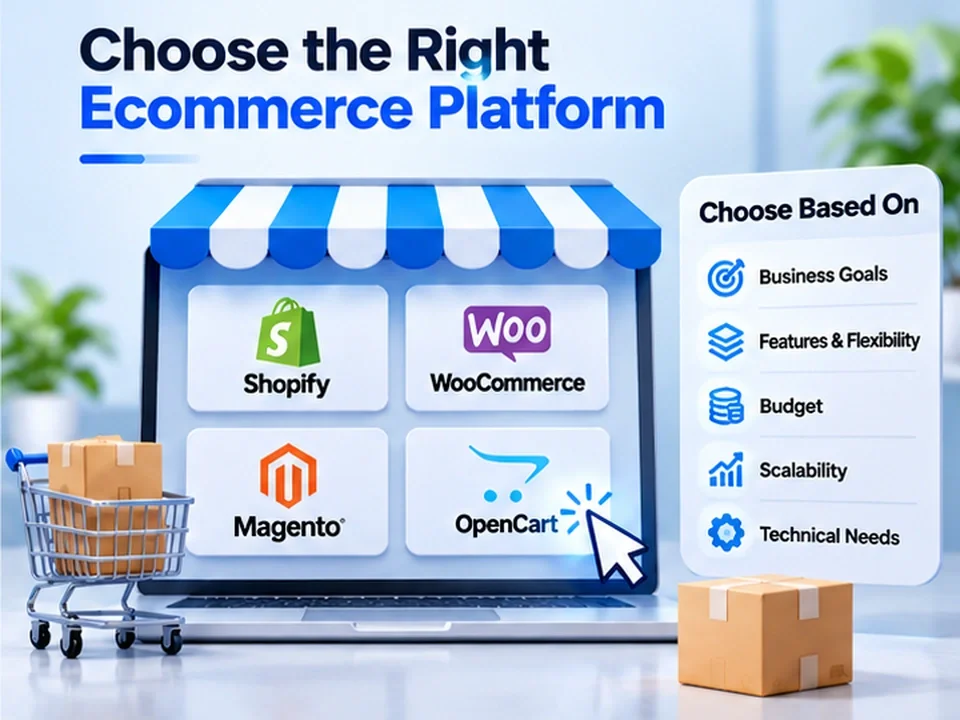
4. Make Sure the Agency Recommends the Right Ecommerce Platform
Your ecommerce platform affects how you manage products, process orders, maintain your website, and expand your business.
A professional e-commerce agency should recommend a platform based on your actual requirements instead of pushing the same technology for every project.
Here are four common options worth considering:
Shopify
Best for businesses that want a managed e-commerce platform with built-in store management, payment options, and a straightforward admin experience.
Learn about Shopify development.
WooCommerce
A strong option for businesses that want flexibility, WordPress integration, content management, and greater control over their online store.
Read: Is WooCommerce Right for Your Online Store?
Magento
Worth considering for larger businesses with complex product catalogues, multiple storefronts, B2B requirements, and advanced integrations.
Read: When Is Magento the Right Choice for a Growing Online Store?
OpenCart
A self-hosted ecommerce platform for businesses that need product management, extensions, and store customization.
Learn about OpenCart solutions.
The right choice depends on your budget, technical requirements, product catalogue, and long-term business plans.
For a more detailed comparison, read How to Choose a Shopify Partner for Your Online Store. It also explains what to evaluate when hiring a specialist for Shopify development.
5. Evaluate the Ecommerce Services Included in the Package
Not every ecommerce agency provides the same services. Some focus only on website development, while others manage the complete process, from initial planning to ongoing optimization.
Before signing an agreement, check which ecommerce services the agency provides and whether they match your project requirements.
A professional ecommerce development package may include:
| Service | What it should cover |
| Ecommerce strategy | Business requirements, platform selection, and project planning |
| UI/UX design | Store layout, navigation, product pages, and checkout experience |
| Website development | Frontend, backend, and ecommerce functionality |
| Payment integration | Secure payment gateway configuration and testing |
| Shipping integration | Delivery options, shipping rules, and tracking |
| Product management | Product categories, variations, and inventory setup |
| Technical SEO | Search-friendly URLs, metadata, indexing, and website structure |
| Performance optimization | Loading speed, mobile performance, and technical improvements |
| Website maintenance | Updates, security, backups, and technical support |
You should also consider whether the agency can support your store’s marketing requirements.
For example, ecommerce SEO helps product and category pages become discoverable in search results. Email marketing, analytics, and paid advertising can also support customer acquisition and retention.
Newton Byte provides ecommerce development services alongside SEO services to help businesses develop and grow their online stores.
6. Define the Project Scope Before Agreeing to a Contract
A clear project scope prevents misunderstandings between your business and the development agency.
Some proposals may mention website development without explaining exactly what the team will deliver. This can create disagreements when you expect features that were never included in the original agreement.
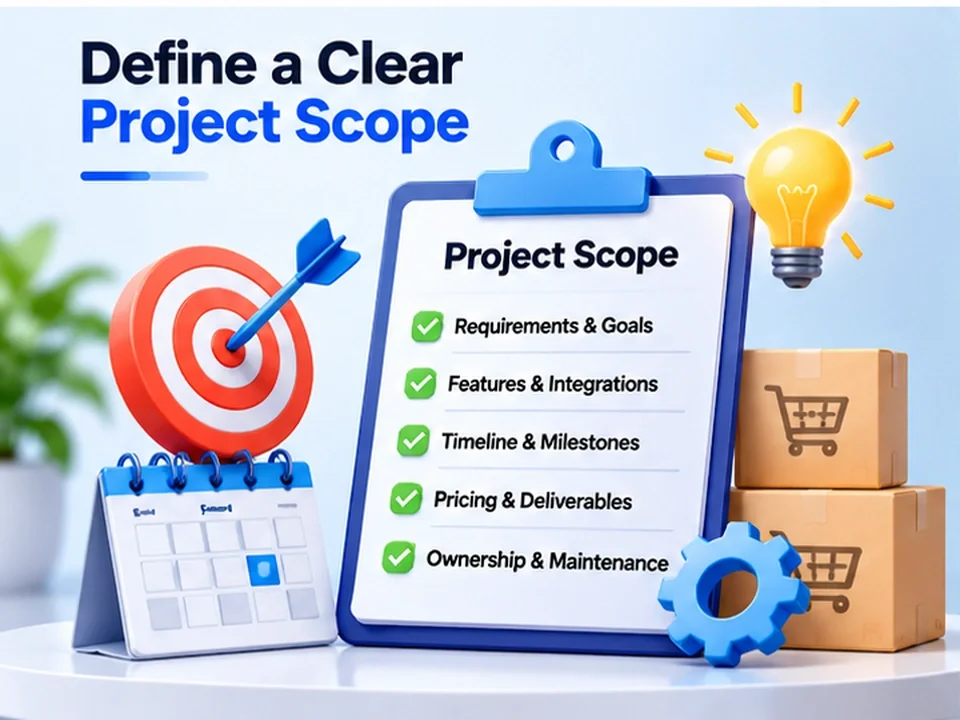
Ask the agency to provide a written project scope covering:
- Number of website pages and product categories.
- Design requirements and customization.
- Product upload responsibilities and estimated quantities.
- Payment gateway and shipping integrations.
- Third-party software and API integrations.
- Mobile responsiveness and browser compatibility.
- SEO setup and technical requirements.
- Testing, revisions, and approval stages.
- Project milestones and delivery timeline.
- Final handover and website ownership.
For example, if you expect the agency to upload 500 products, make sure the proposal clearly mentions this responsibility. Similarly, if your business needs an ERP integration, confirm whether the integration, testing, and configuration are included.
A detailed project scope makes it easier to compare proposals from different agencies because you can evaluate what each one actually offers.
7. Ask About Website Security, Performance, and SEO
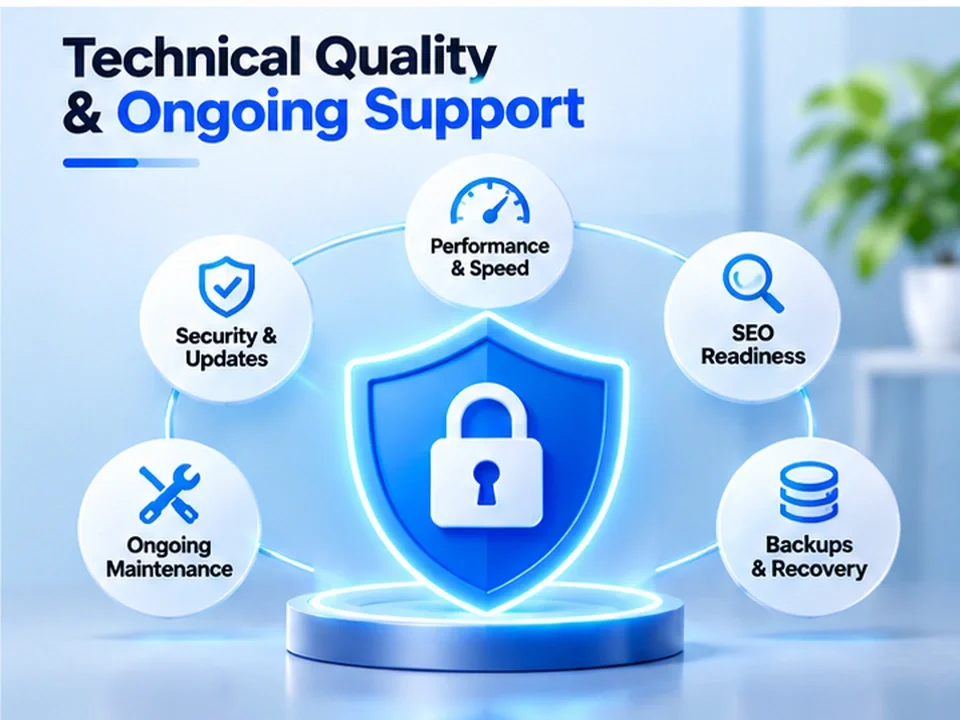
An attractive online store is not enough. Your website must also protect customer information, process transactions reliably, and provide a good shopping experience.
A professional ecommerce agency should consider security, performance, and SEO throughout development rather than treating them as optional improvements after launch.
Website security
Ask how the agency protects your store and customer information. Important considerations include:
- SSL certificate configuration.
- Secure payment gateway integration.
- Regular software and plugin updates.
- Website backups and recovery procedures.
- User access permissions.
- Protection against common website vulnerabilities.
Your payment gateway should handle sensitive payment information through its approved security processes. Avoid solutions that expose customer payment details unnecessarily.
Website performance
Website speed affects how easily customers can browse products and complete purchases.
Ask whether the development team considers:
- Optimized product images.
- Efficient code and scripts.
- Browser caching and suitable hosting.
- Mobile loading performance.
- Core Web Vitals.
- Database and server performance.
Search engine optimization
SEO should be considered during the development process, not added as an afterthought.
Your ecommerce agency should understand:
- Search-friendly URL structures.
- Product and category page optimization.
- Title tags and meta descriptions.
- Product structured data where appropriate.
- XML sitemaps and canonical tags.
- Internal linking between relevant pages.
- Mobile usability and indexability.
These technical foundations help search engines understand your store and make its important pages easier to discover.
8. Understand the Pricing Structure and What You Are Paying For
Price is an important consideration when selecting an ecommerce agency, but choosing the cheapest proposal can create problems if essential services are missing.
Two agencies may quote different amounts because they offer different levels of design customization, development work, integrations, testing, and support.
Request a detailed breakdown of the proposed cost.
Your estimate should clarify:
- Website design and development fees.
- Platform subscriptions, where applicable.
- Premium themes, plugins, and extensions.
- Payment gateway integration costs.
- Hosting and domain expenses.
- Third-party software subscriptions.
- Content and product upload charges.
- Ongoing maintenance fees.
Also, clarify how the agency handles additional requirements. If you request a new feature during development, will the team charge separately or include it within the agreed scope?
Ask for milestone-based payments where appropriate, with each payment linked to a clearly defined project stage.
The goal is not simply to find a low-cost provider. It is to understand the value, quality, and services included in the investment.
9. Check Communication, Project Management, and Transparency
Ecommerce development requires regular communication between your business and the development team. You will need to review designs, approve functionality, provide product information, and make decisions throughout the project.
An agency should have a clear communication process so you always understand what is happening.
Before choosing an ecommerce agency, find out:
- Who will manage your project?
- Will you have direct access to the development team?
- How frequently will the agency share progress updates?
- How will you review designs and development work?
- Where will you report issues or request changes?
- What happens if the project timeline changes?
A reliable team will communicate delays, explain technical decisions, and discuss potential problems before they affect the project.
Pay attention to how the agency communicates during the initial consultation. If it avoids specific questions or makes unrealistic promises, consider that a warning sign.
10. Confirm Post-Launch Support and Maintenance
Your online store still needs attention after development is complete. New features, software updates, security requirements, and changes in customer behaviour can all create ongoing technical needs.
This is why post-launch support should be part of your decision from the beginning.
Ask the agency whether it provides:
- Technical troubleshooting and bug fixes.
- Regular platform and plugin updates.
- Security monitoring and backups.
- Website speed monitoring.
- Payment and checkout issue resolution.
- Feature improvements and functionality updates.
- Technical assistance when problems occur.
You should also clarify the support agreement, including response times, maintenance frequency, service costs, and the duration of included support.
For example, a checkout issue during a busy sales period can directly affect your revenue. You need to know who will handle the problem and how quickly the team will respond.
Newton Byte offers maintenance and support services to help businesses maintain their websites beyond the initial development stage.
Questions to Ask an Ecommerce Agency Before Hiring
Before making your final decision, arrange a consultation with your shortlisted agencies. The following questions can help you understand their experience, development process, and ability to manage your project.
| Question | What you should look for |
| Which ecommerce platforms do you specialize in? | Experience with platforms relevant to your business |
| Can you show similar completed projects? | Practical and relevant development experience |
| How will you determine the right platform? | Recommendations based on your requirements |
| What is included in the project scope? | Clearly defined deliverables |
| How do you handle integrations? | Experience with payment, shipping, and business systems |
| Is SEO included in development? | Understanding of technical SEO requirements |
| Who owns the website after launch? | Clear ownership and access arrangements |
| What post-launch support do you provide? | Defined maintenance and support responsibilities |
Do not hesitate to ask for clarification if an agency gives vague answers. You should understand exactly what you are paying for before committing to a project.
Why Choose Newton Byte for Ecommerce Development?
Choosing a development partner means finding a team that understands both your technical requirements and your business objectives. Newton Byte provides ecommerce development solutions for businesses looking to launch, upgrade, or expand their online stores.
Our ecommerce capabilities cover:
- Shopify Development: Store setup, theme customization, integrations, and functionality improvements.
- WooCommerce Development: WordPress-based ecommerce stores with flexible product and store management.
- Custom Ecommerce Development: Tailored online stores designed around specific business requirements.
- Magento Development: Ecommerce solutions for businesses with more advanced store requirements.
- OpenCart Development: Store setup, customization, optimization, and migration solutions.
We also consider website performance, mobile usability, technical SEO, and integrations during development.
Our approach focuses on understanding your requirements before recommending a solution. Whether you are starting a new online business or improving an existing store, we aim to build an ecommerce website that supports your current operations and plans.
Explore our ecommerce solutions to learn more about our development services.
Frequently Asked Questions
1. What does an ecommerce agency do?
An ecommerce agency helps businesses plan, design, develop, and manage online stores. Its services may include platform selection, website design, development, payment integration, product management, technical SEO, performance optimization, and ongoing maintenance.
2. How do I choose the right ecommerce agency?
Start by identifying your business requirements and shortlisting agencies with relevant ecommerce experience. Review their development portfolios, check previous projects, compare services, and request a detailed project scope. Also, evaluate their communication, pricing, technical expertise, and post-launch support.
3. How much does it cost to hire an ecommerce agency?
The cost depends on the platform, website complexity, number of products, design requirements, integrations, and additional services. A basic store generally requires less development work than a custom ecommerce platform with advanced functionality. Request a detailed proposal to understand the complete investment.
4. Which ecommerce platform should I choose for my online store?
Shopify suits businesses looking for a managed platform and straightforward store administration. WooCommerce offers flexibility and WordPress integration. Magento supports more complex e-commerce requirements, while OpenCart provides a self-hosted alternative. The best option depends on your business model, budget, and technical requirements.
5. What should an e-commerce development project include?
A typical e-commerce project includes requirement analysis, platform selection, UI/UX design, website development, product setup, payment and shipping integrations, mobile optimization, testing, and deployment. Depending on the agreement, it may also include technical SEO, training, and post-launch support.
6. How long does it take an ecommerce agency to build an online store?
A straightforward e-commerce website may take a few weeks, while custom stores with advanced functionality, extensive product catalogues, or third-party integrations can take several months. The timeline depends on the project scope, content readiness, design approvals, and testing requirements.
7. Why is post-launch support important for an ecommerce website?
Post-launch support helps keep your online store secure, functional, and up to date. It covers technical issues, software updates, backups, performance improvements, and troubleshooting. Regular maintenance also helps prevent technical problems from disrupting customer purchases.
8. Should I choose an ecommerce agency that also provides SEO services?
Yes, it can be beneficial to work with an agency that understands both ecommerce development and SEO. This allows technical SEO requirements, website structure, product pages, mobile usability, and performance to be considered during development. However, confirm exactly which SEO activities are included in the agreement.
Final Thoughts
Choosing the right ecommerce agency requires more than comparing website designs and development prices. You need a partner with relevant technical experience, a clear project scope, transparent communication, and a proper understanding of your business requirements.
Take time to review previous projects, evaluate the proposed ecommerce services, discuss platform options, and confirm post-launch support before making your decision. These steps can help you avoid unnecessary development costs and choose a solution that supports your long-term business goals.
At Newton Byte, we help businesses turn their ecommerce requirements into functional, scalable online stores. Whether you need a new Shopify store, WooCommerce development, Magento solutions, or a custom e-commerce website, our team can help you plan the right approach.
Ready to build or improve your online store? Contact us at Newton Byte to discuss your project requirements and find the right e-commerce solution for your business.
Explore Related Blogs.