
Logistics and freight companies in the UAE compete on reliability, but that reliability is nearly impossible to judge from a website that just lists services in vague terms. B2B buyers evaluating a freight partner want specifics: fleet capacity, coverage areas, tracking capabilities, and proof the company has handled shipments like theirs before. A generic corporate website rarely provides that, and the result is quote requests going to competitors who look more capable, even when they aren’t.
At Newton Byte, we’ve worked with logistics and freight clients across the UAE, and the consistent finding is that specificity, not polish, is what actually moves a company onto a buyer’s shortlist.
Here’s what a logistics website in the UAE needs to actually generate serious B2B inquiries.
Why Generic Corporate Websites Underperform in Logistics
Many logistics companies use templated, text-heavy websites with little differentiation. For a B2B buyer comparing five freight forwarders in an afternoon, a website that doesn’t clearly answer whether this company can handle their specific shipment gets skipped in favor of one that does.
What logistics buyers actually look for:
- Specific service capabilities such as air, sea, and land freight, plus customs clearance and warehousing
- Coverage areas and route networks
- Fleet size, warehouse capacity, or partner network details
- Case studies or client industries served
- A fast, simple way to request a quote
Key Features Every Logistics Website Needs
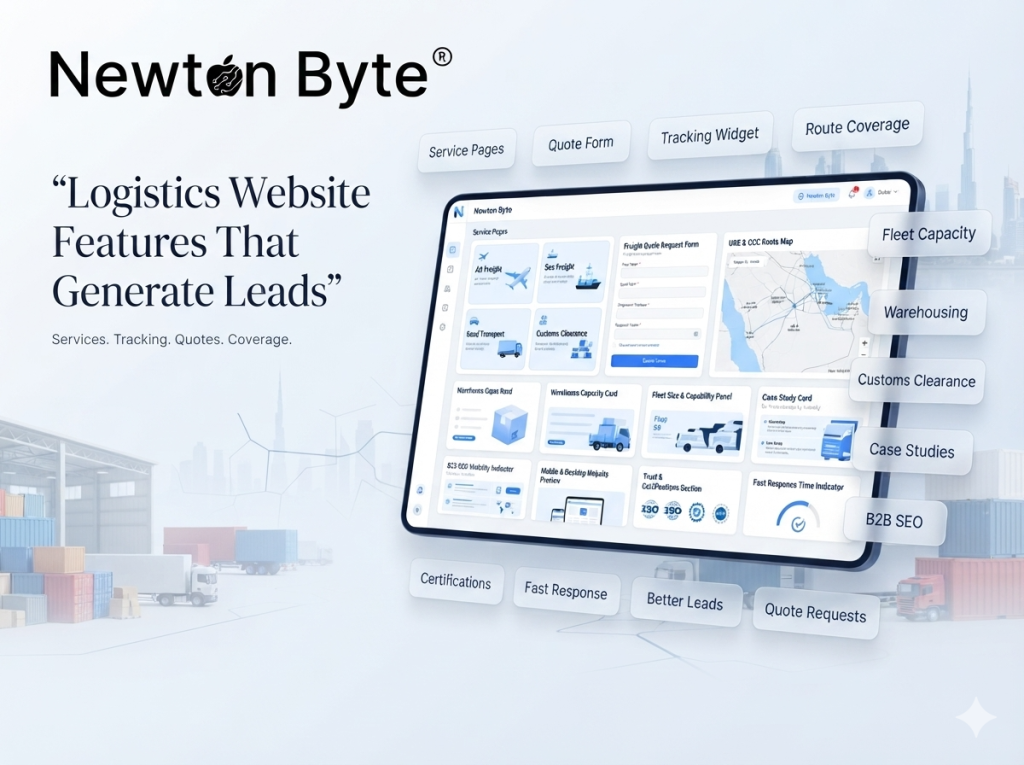
Service-specific pages. Air freight, sea freight, land transport, and warehousing each deserve dedicated pages explaining capacity, process, and typical use cases, not a single combined services paragraph.
Quote request forms built for logistics. Generic contact forms don’t capture what a freight company needs to price a shipment. A structured quote form covering origin, destination, cargo type, and volume speeds up response time and improves lead quality.
Tracking integration. Even a simple shipment tracking widget signals operational maturity and reduces client service inquiries.
Case studies by industry. A logistics company serving retail, manufacturing, and food and beverage clients should show relevant examples for each, since buyers want proof of experience with their specific type of cargo.
Clear coverage maps. Visual representation of routes and coverage areas helps buyers quickly assess fit without reading dense text.
The Complete Process: Building a Logistics Website That Generates Leads
- Service mapping. Break down every logistics service into its own page with specific operational detail.
- Quote form design. Build structured inquiry forms that collect the information your sales team actually needs to respond with a real quote quickly.
- Case study collection. Gather real, anonymized where necessary, shipment examples across the industries you serve most.
- Trust and credential display. Certifications, partnerships, and years in operation should be visible, not buried in an about page.
- B2B focused SEO. Target searches like freight forwarder UAE, sea freight Dubai to a specific destination, and industry-specific logistics needs.
- Mobile and desktop testing. B2B buyers often research on desktop during work hours. Ensure the experience is equally strong on both.
Common Mistakes Logistics Companies Make
- Vague service descriptions that don’t specify cargo types, volumes, or route capabilities the company actually handles.
- Generic contact forms that require multiple email exchanges just to gather quote details, slowing down the sales cycle.
- No visible proof of scale or experience, leaving buyers unsure if the company can actually handle their volume.
- Ignoring SEO for route-specific searches, missing high-intent traffic from buyers searching specific shipping lanes.
| Helpful Readings: Web Design and Development Services Built to Convert and Rank. Discover how a professionally built website can generate more leads, improve user experience, and strengthen your search visibility. Hiring a Web Design Agency Versus a Freelancer: Compare the benefits, costs, and long-term value of both options before making your decision. What Agencies Won’t Tell You About Website Development Cost: Learn what really influences website pricing and avoid unexpected costs during your project. |
Expert Insights and Best Practices
B2B logistics buyers typically evaluate three to five providers before requesting quotes, and website clarity directly influences which companies make that shortlist. Companies that clearly communicate specific capabilities, rather than broad claims like global logistics solutions, consistently generate more qualified quote requests, because buyers can self-select based on actual fit before contacting sales.
Response time to quote requests also matters enormously in this industry. A well-structured quote form that captures shipment details upfront allows sales teams to respond faster, which is frequently the deciding factor between competing freight quotes of similar price.
Cost and Business Impact
Logistics and freight company websites in the UAE typically range from AED 8,000 for a clean, service-focused site to AED 25,000 or more for companies needing tracking integration, multi-language support, or client portal functionality. Companies that improve quote form structure and service page clarity often see a meaningful increase in quote request volume without any additional marketing spend, simply by converting more of their existing website traffic.
Why Choose Newton Byte for Your Logistics Website
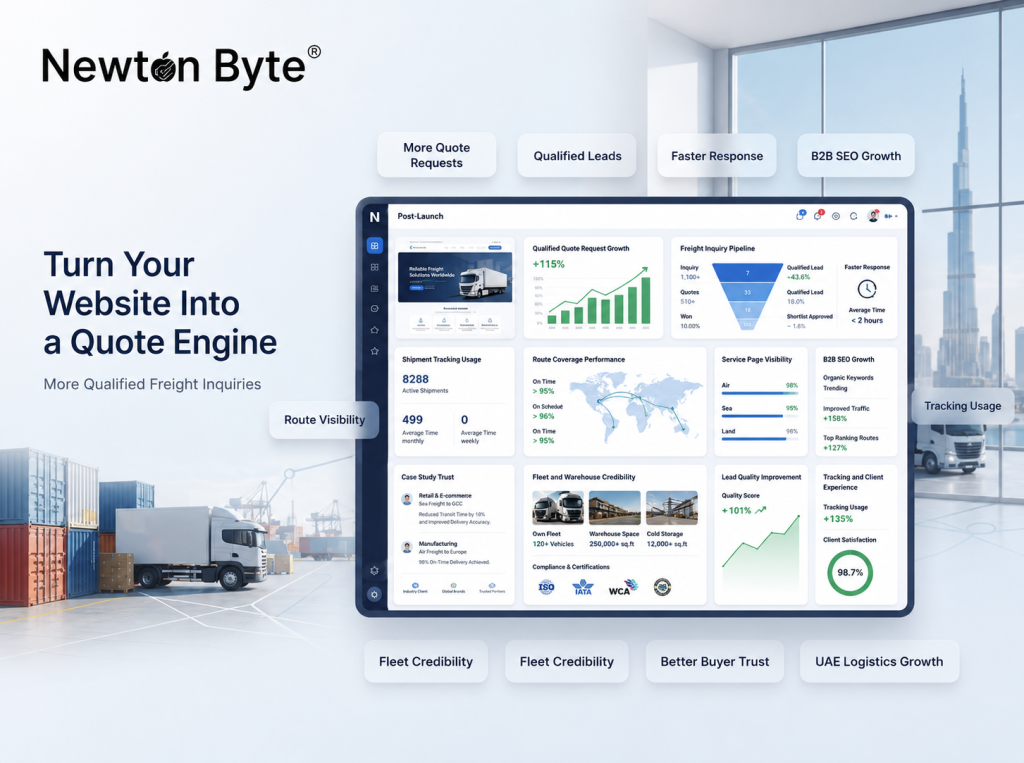
B2B buyers move fast when comparing freight partners, and the website has to work just as fast to keep you in the running. That’s the focus of our work with logistics clients at Newton Byte. We break services into specific, detailed pages instead of one vague overview; we build quote forms structured around what your sales team actually needs to respond quickly; and we set up SEO around the specific routes and cargo types you handle rather than generic logistics keywords. If your current site reads like a brochure rather than a working sales tool, we’re happy to review it and show you exactly what a more specific, conversion-focused version would look like.
Frequently Asked Questions
It’s not mandatory, but even basic tracking integration significantly improves perceived professionalism and reduces client service calls asking for status updates. For companies handling recurring shipments for the same clients, this feature tends to pay for itself fairly quickly in reduced support workload.
Yes. Air, sea, land freight, and warehousing each have different buyer questions, different typical timelines, and different pricing structures, so they should have dedicated, detailed pages rather than being combined into one general services description.
Typically six to ten weeks depending on the number of service pages, the complexity of any tracking or portal integrations, and how quickly case study content and credentials can be gathered from your operations team.
Generally no, since freight pricing varies significantly by volume, route, season, and current market conditions. A clear, well-structured quote request process tends to serve buyers better than fixed pricing tables, which would likely be inaccurate for most inquiries anyway.
At minimum, origin and destination, cargo type, approximate volume or weight, and desired timeline. The more relevant detail you collect upfront, the faster and more accurate your team’s response can be, which often becomes the deciding factor between similarly priced competitors.
For companies serving international clients or a broad regional market, offering English and Arabic, and sometimes additional languages depending on your client base, can meaningfully expand both reach and perceived credibility with new prospects.
Very important, particularly when tied to specific industries or shipment types. B2B buyers want proof of relevant experience before committing to a new provider, and a testimonial from a company in their own industry carries far more weight than a generic quote.
Where accurate and current, yes. Specific numbers build considerably more credibility than vague claims of scale, and they help buyers quickly self-assess whether your company can realistically handle their volume before they even reach out.
Final Thoughts
A logistics company’s website is often the first filter B2B buyers use before requesting quotes. If your site doesn’t clearly demonstrate specific capabilities and make quoting easy, you’re likely losing serious inquiries to competitors who present their services more clearly.
Need a logistics website built to win more quote requests? Get in touch with Newton Byte for a free consultation.